Inspect the Existing Surface
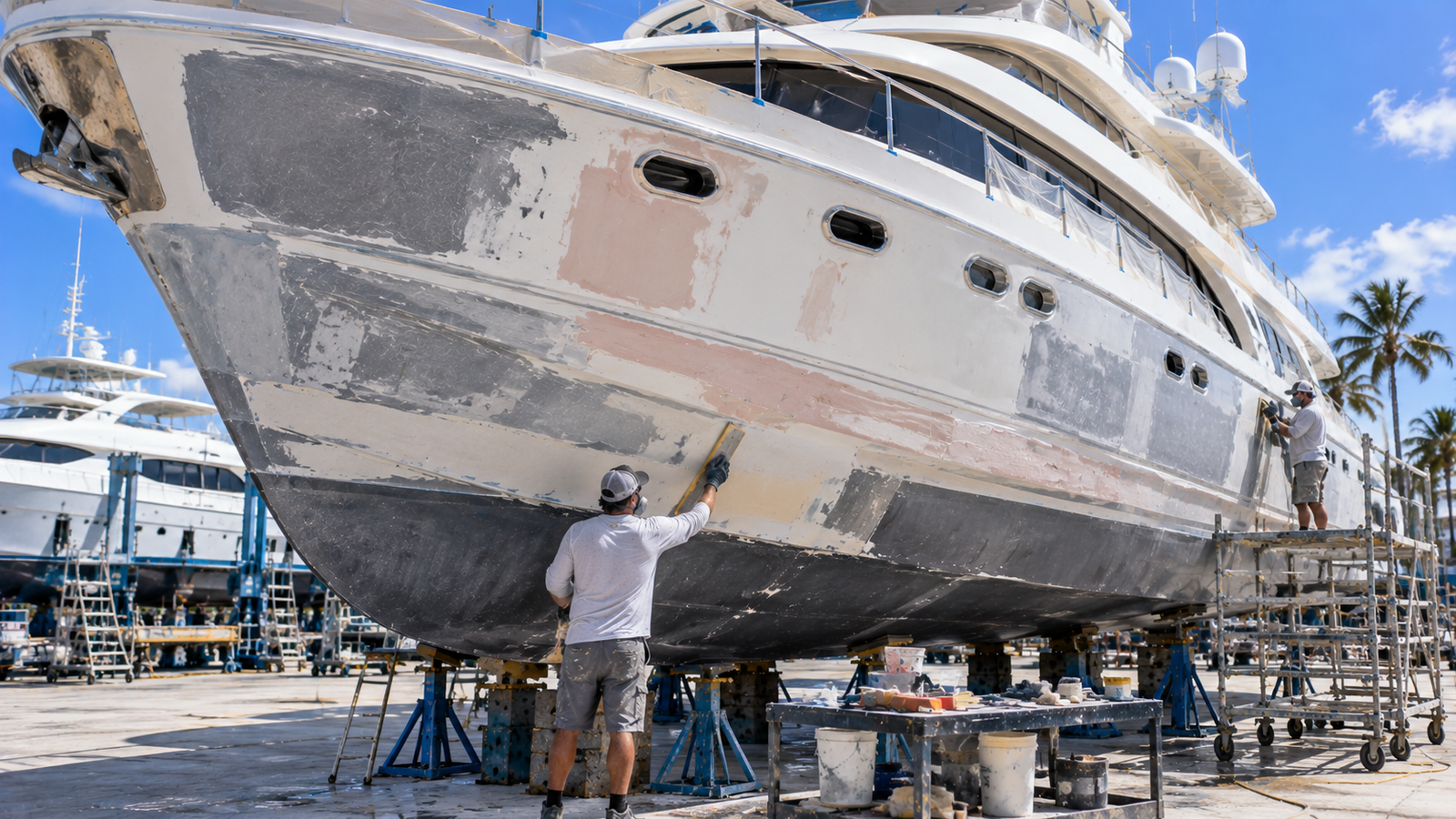
The process begins by looking at the current condition of the hull, including previous repairs, coating condition, low areas, visible waves and other surface irregularities.
Professional yacht fairing and surface preparation for smoother, straighter hull surfaces before marine painting and refinishing.
RD Yacht Refinishing corrects low areas, uneven transitions, previous repair areas and other surface irregularities as part of the preparation process for boat and yacht refinishing projects throughout Fort Lauderdale and South Florida.
Fairing is the process of correcting the shape and smoothness of a boat or yacht surface before the final refinishing stages. It helps create a more consistent surface where low areas, repair transitions or other irregularities are present.
A yacht hull can contain low spots, waves, previous repair areas and uneven transitions that may become more noticeable after a new finish is applied.
Fairing addresses areas where the shape or smoothness of the surface needs correction. Depending on the vessel, this may involve a localized repair area or larger portions of the hull.
The objective is to create a smoother and more consistent foundation before the vessel continues through sanding, primer preparation and painting.
Does the Hull Need Fiberglass Repair? →Surface preparation is the broader process of getting the hull ready for the coating system that will follow. Even a hull that does not require extensive fairing still needs appropriate preparation before refinishing.
Preparation can include sanding, cleaning, evaluating existing coatings and preparing repaired or faired areas for subsequent primer and paint stages.
The exact preparation depends on the existing surface, repair history and the marine coating system planned for the vessel.
Explore Boat & Yacht Painting →Fiberglass repair addresses damaged fiberglass or laminate. Fairing addresses the shape and smoothness of the surface. When fiberglass damage is present, the damaged material should be addressed before the repaired area is faired into the surrounding surface.
These related stages help move the hull from its existing condition toward a surface ready for refinishing.
Address damaged fiberglass, cracks, impact areas or structural issues where required.
Fiberglass Repair →Correct low areas, uneven transitions and surface irregularities to improve the fairness of the hull.
Surface CorrectionSand and prepare the corrected surface for the primer and marine finishing stages that follow.
Hull & Topsides Painting →The final coating follows the shape of the surface beneath it. Proper repair, fairing and preparation help establish the foundation for the yacht refinishing work that follows.
Every boat and yacht starts in a different condition. The exact process depends on the existing surface, previous repairs, areas requiring correction and the finish planned for the vessel.
The process begins by looking at the current condition of the hull, including previous repairs, coating condition, low areas, visible waves and other surface irregularities.
If damaged fiberglass, cracks, impact areas or other repair conditions are discovered, the required fiberglass work is addressed before creating the final surface.
Explore Fiberglass Repair →Fairing materials can be used where necessary to correct low areas, uneven transitions and other irregularities affecting the shape and fairness of the surface.
The corrected areas are progressively worked and evaluated so they transition more consistently into the surrounding hull surface.
Once the required surface correction is complete, the hull can continue through the preparation and primer stages appropriate for the refinishing system being used.
After the surface and primer stages are properly prepared, the project can continue toward the selected marine finishing system.
Hull & Topsides Painting →One vessel may only need correction around a previous repair. Another may have multiple low areas or broader surface irregularities. A hull already in suitable condition may require preparation without extensive fairing.
RD evaluates the actual surface so the work can be based on the condition of the vessel and the refinishing project being planned.
Several conditions can affect the amount of repair, fairing and preparation required before refinishing.
Show us the current condition of the hull and the areas you plan to refinish. RD Yacht Refinishing can evaluate the repair, fairing and preparation involved in the project.
A high-quality marine finish begins before the final paint is applied. The shape, smoothness and preparation of the surface underneath can directly affect how the finished hull looks.
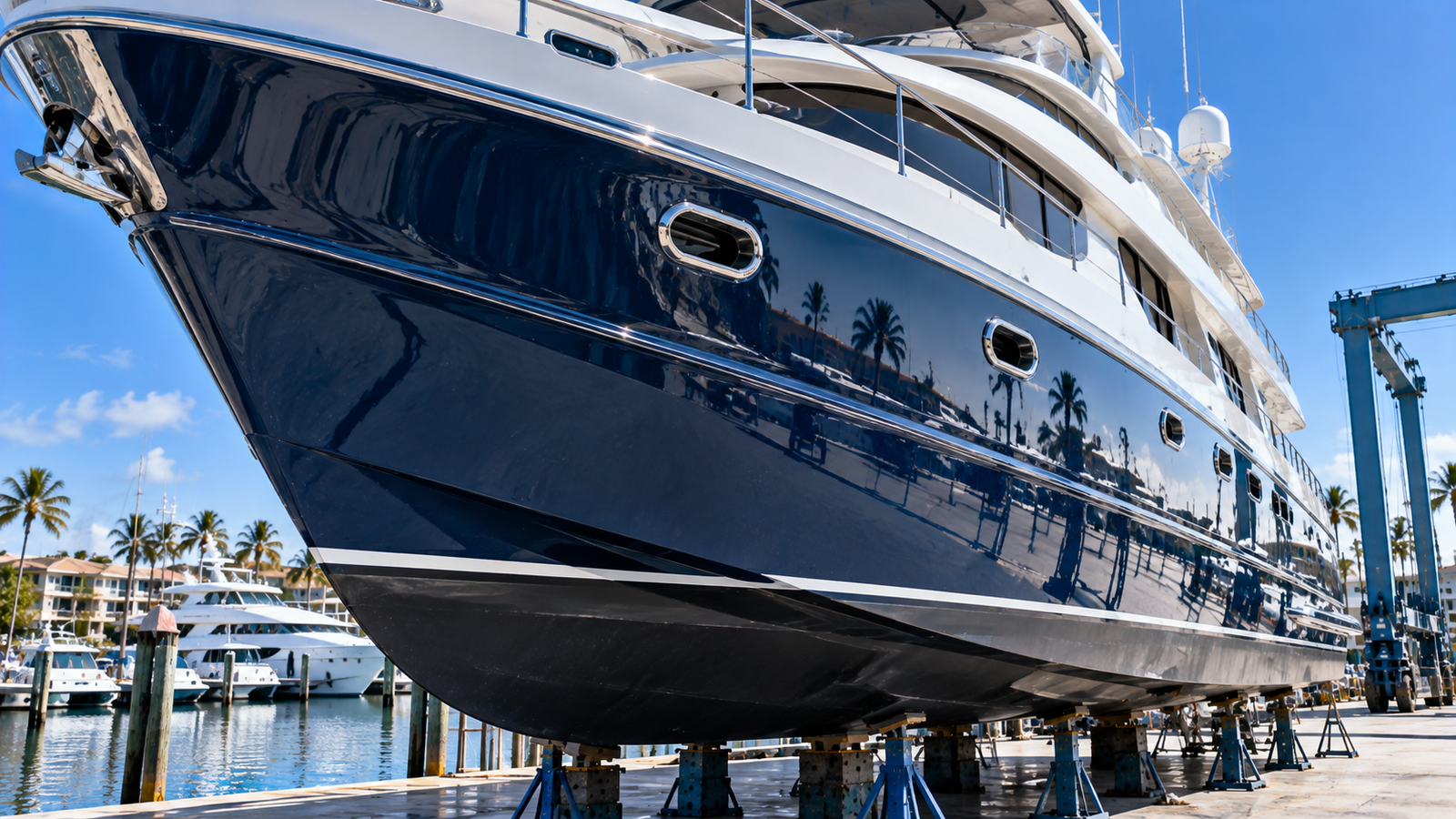
A glossy yacht hull creates long reflections across a large surface. Those reflections can make variations in the underlying hull more noticeable.
Low areas, waves, uneven repair transitions and other surface irregularities do not simply disappear because a new coating is applied.
When correction is required, fairing helps establish a smoother and more consistent surface before the project continues through primer preparation and final painting.
Look down the side of a dark, glossy yacht hull and the reflections create long visual lines. When the surface is consistent, those reflections can appear smoother and more continuous.
Surface irregularities can interrupt those visual lines. That is one reason preparation becomes especially important when a refinishing project is intended to produce a smooth, reflective finish.
Depressed areas can affect the visual flow of the finished hull.
Uneven areas may become more noticeable when light travels along a glossy surface.
Previous fiberglass repairs may require additional correction so they transition into the surrounding hull.
Primer and marine topcoats are parts of the refinishing system, but they are not substitutes for necessary fiberglass repair or surface correction.
If the hull requires repair or fairing, those conditions should be addressed as part of the preparation process rather than expecting the final coating to hide them.
Depending on the condition of the vessel and the coating system selected, several stages can contribute to the surface underneath the final topcoat.
Damaged fiberglass is addressed where required before final surface correction.
Explore Repair →Low areas, transitions and surface irregularities are corrected where necessary.
Surface CorrectionThe corrected surface continues through the appropriate preparation and primer stages.
Prepare the SurfaceThe selected marine finish is applied over the prepared surface and coating system.
Yacht Painting →RD Yacht Refinishing combines fiberglass repair, surface correction and yacht painting capabilities so related stages of a refinishing project can be addressed as part of the overall work.
Not every boat or yacht requires extensive fairing before refinishing. The amount of surface correction depends on the condition of the hull, previous repair work and the quality of the surface required for the planned finish.
Areas that sit below the surrounding surface may interrupt the overall fairness of the hull and become more noticeable after refinishing.
Long hull sides can reveal subtle waves and variations, particularly when viewed from an angle or under reflected light.
After fiberglass damage is repaired, the repair may require fairing so the corrected area transitions more smoothly into the surrounding hull.
Fiberglass Repair →Previous repairs may leave edges, transitions or irregularities that become visible when the hull is being prepared for refinishing.
Surface damage can leave localized irregularities. Depending on the underlying condition, repair and fairing may both be involved before refinishing.
A reflective finish can make variations in the underlying surface easier to see, making careful evaluation and preparation especially important.
Awlgrip & Alexseal Painting →Looking directly at a hull does not always reveal every variation in the surface. Viewing along the length of the hull and observing how light and reflections travel across it can make certain irregularities more apparent.
During preparation, areas requiring additional correction can become easier to identify as existing coatings are worked and the surface is evaluated.
Long sight lines can make waves and uneven transitions easier to notice.
Changes in reflected lines can help reveal variations in the surface.
Older repair areas may require additional correction before refinishing.
Fairing is used to improve the shape and smoothness of a surface. It should not be treated as a substitute for repairing damaged fiberglass.
Determine whether the issue is primarily surface irregularity or whether damaged fiberglass is also present.
Cracked or damaged fiberglass is addressed before the final surface is established.
The repair and surrounding area can then be corrected and blended into a more consistent surface.
A previous fiberglass repair may only require localized surface correction. Other vessels may have irregularities across larger sections of the hull that require more extensive preparation.
The appropriate scope depends on what is found during the surface evaluation and what is required for the planned refinishing project.
Are there visible waves or low areas along the hull?
Has the vessel had previous fiberglass repairs?
Are old repair transitions visible through the finish?
Are there gouges, dents or other damaged areas?
Is the yacht being prepared for a new high-gloss finish?
Does the existing coating need additional preparation?
RD Yacht Refinishing can review the areas being refinished and determine how fiberglass repair, fairing and surface preparation fit into the project.
Premium marine coating systems depend on the condition and preparation of the surface underneath them. When fairing is required, correcting the hull before the final coating stages helps establish the foundation for the refinishing work that follows.
Awlgrip and Alexseal finishes are only one part of a complete yacht refinishing project.
Before the final finish is applied, the existing surface must be evaluated and prepared. Depending on the vessel, that preparation may include fiberglass repair, fairing, sanding, surfacing and primer stages.
When low areas, repair transitions or other surface irregularities are present, fairing can become an important part of building the surface before the finishing stages begin.
Explore Awlgrip & Alexseal Yacht Painting →Review the existing hull, coatings and repair areas.
Address fiberglass damage where required.
Correct the shape and refine irregular areas.
Continue through the appropriate primer and preparation stages.
Complete the selected marine coating system.
The final finish follows the shape of the prepared surface. Existing waves, low areas and uneven transitions should be evaluated before painting.
A hull in suitable condition may need less correction, while repaired or uneven surfaces can require additional fairing and preparation.
Repair, fairing, surfacing, priming and painting are related stages that build toward the final refinished surface.
Existing coatings, fiberglass condition, previous repairs and surface irregularities can all affect the preparation required before refinishing.
Fairing is performed where surface correction is needed rather than assuming every hull requires the same amount of filler or correction.
After the required correction is complete, the surface continues through the preparation and coating stages appropriate for the selected refinishing system.
When a yacht needs more than a straightforward repaint, several services may become part of the same refinishing project.
Address cracks, impact damage and damaged fiberglass where required.
Explore Service →Correct low areas, repair transitions and other irregularities before the coating stages.
Current ServiceContinue the prepared surface through the planned marine refinishing system.
Explore Service →Located in Davie, RD Yacht Refinishing provides boat and yacht fairing, fiberglass repair, surface preparation and marine refinishing services for projects serving Fort Lauderdale and South Florida.
Tell us about the vessel, its current condition and the areas you want refinished. We can discuss how repair, fairing and surface preparation fit into the project.
Questions about fairing often come up when a boat or yacht is being repaired, restored or prepared for a new marine finish. Here are answers to some of the most common ones.
Yacht fairing is the process of correcting and smoothing areas of a hull or other surface so low spots, uneven transitions and other irregularities can be improved before subsequent preparation, priming and refinishing stages.
No. The amount of fairing depends on the condition of the existing surface. A hull that is already in suitable condition may require preparation without extensive fairing, while another vessel may need localized or broader surface correction.
No. Fiberglass repair addresses damaged fiberglass or laminate. Fairing addresses the shape and smoothness of the surface. When fiberglass damage is present, the repair may need to be completed before the area is faired into the surrounding surface.
Learn About Fiberglass Repair →Reflective finishes can make variations in the underlying surface easier to notice. Low areas, waves and uneven repair transitions may affect how reflections travel across the finished hull, which makes careful surface evaluation and preparation particularly important.
Yes. Previous repair areas can sometimes have visible edges, low areas or uneven transitions. When a vessel is being refinished, those areas can be evaluated to determine whether additional surface correction is appropriate.
A new coating should not be treated as a substitute for necessary surface correction. The final finish follows the surface underneath it, so irregularities may remain visible if the underlying condition is not addressed during preparation.
It can be. If the hull requires surface correction, fairing may be one of the preparation stages before the primer and final coating system. The exact preparation depends on the vessel, substrate, existing coatings and planned refinishing system.
Awlgrip & Alexseal Yacht Painting →That depends on the condition of the vessel. Some projects may involve a localized area around a previous repair, while others may require correction across larger portions of the hull. The surface should be evaluated before determining the scope.
RD Yacht Refinishing is located in Davie, Florida and serves boat and yacht refinishing projects in Fort Lauderdale and throughout South Florida.
Fort Lauderdale Services →Contact RD Yacht Refinishing with information about the vessel, the areas being repaired or refinished, and the current condition of the hull. Photos can also help provide initial context before the project is evaluated in greater detail.
Request an Estimate →Fairing often sits between repair work and the final painting stages. Explore the related RD Yacht Refinishing services that may be part of a larger project.
Repair damaged fiberglass before establishing the final surface.
Explore Service → 02Learn about repairs involving damaged fiberglass structures and laminate.
Explore Service → 03Continue from surface preparation into hull and topsides refinishing.
Explore Service → 04Explore RD's marine painting and refinishing services.
Explore Service →Tell us about your boat or yacht, the condition of the hull and the areas you want repaired or refinished. RD Yacht Refinishing can discuss the fiberglass repair, fairing, surface preparation and painting involved in your project.