Custom Fiberglass Components
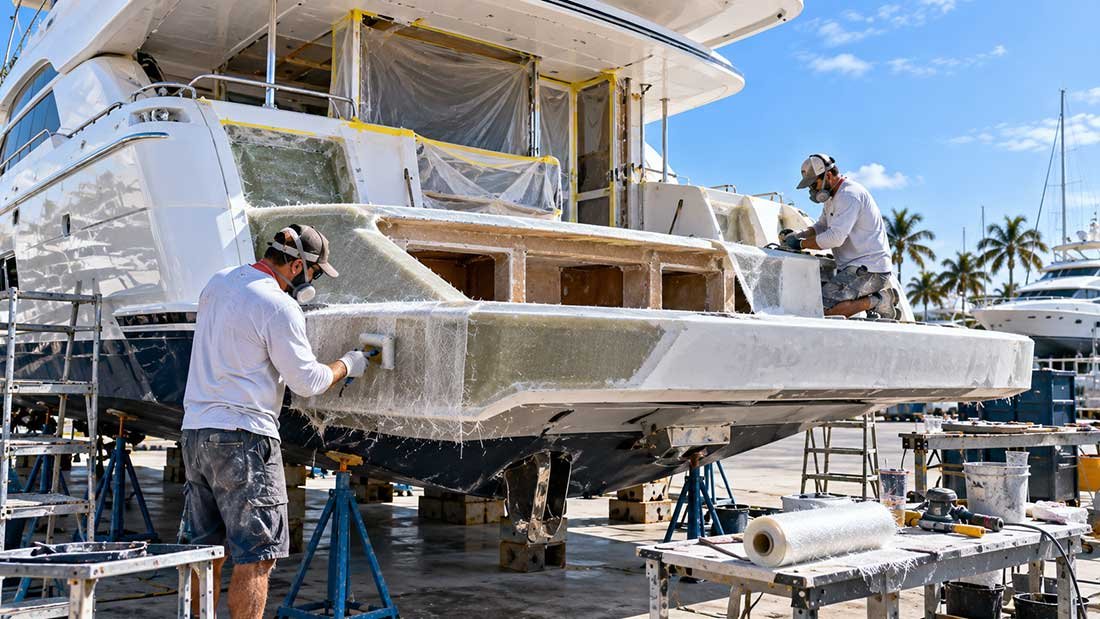
New fiberglass components can be formed and fabricated around the requirements of the vessel and the intended finished shape.
Custom fiberglass fabrication for boats and yachts, including new components, modifications, rebuilt areas and fiberglass structures integrated into the existing vessel.
RD Yacht Refinishing approaches custom fiberglass work as a complete fabrication process—from understanding the existing construction and desired change through forming, fiberglass work, integration, fairing and final surface preparation.
Fiberglass fabrication involves creating, rebuilding or modifying part of a boat or yacht—not simply repairing a crack or damaged surface.
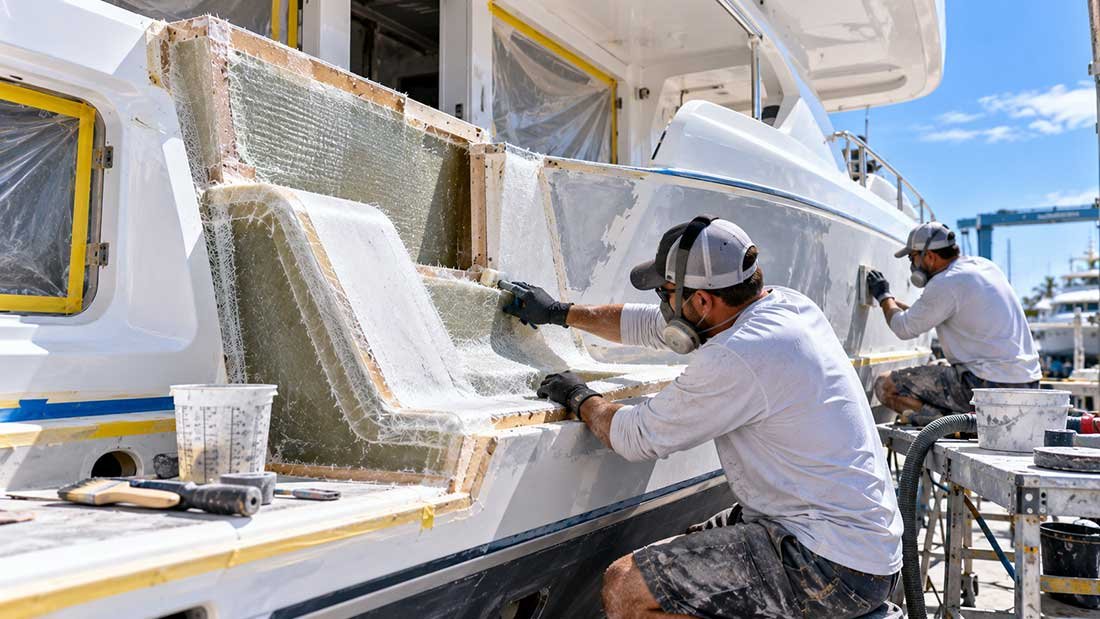
Depending on the project, fabrication can involve changing an existing fiberglass structure, building a new component, reshaping an area of the vessel or integrating newly fabricated fiberglass into the surrounding construction.
New fiberglass components can be formed and fabricated around the requirements of the vessel and the intended finished shape.
Existing fiberglass areas can be changed, reshaped or reconfigured when a project requires more than a localized repair.
Portions of existing fiberglass construction can require removal and rebuilding before the area can be blended back into the vessel.
Newly fabricated fiberglass must transition into the surrounding vessel so the new work becomes part of the existing surface and construction.
Repair generally focuses on restoring fiberglass that has been cracked, fractured, deteriorated or otherwise damaged.
Explore Fiberglass Repair →Fabrication focuses on building, rebuilding, reshaping or modifying fiberglass as part of a custom marine project.
YOU ARE HEREThe fabrication itself is only one stage. The new fiberglass also has to be integrated, shaped, faired and prepared so the completed area transitions properly into the surrounding surface.
A custom fiberglass project involves more than laying fiberglass over a shape. The new work has to be planned, formed, laminated and integrated into the existing boat or yacht before the surface can be faired and refinished.
Every fabrication project starts with the area that already exists. The surrounding construction, available space, desired shape and final use all influence how the new fiberglass work is approached.
Depending on the project, forms or templates may be used to establish the new shape before fiberglass reinforcement is applied and built into the required configuration.
The fabricated area is then integrated with the surrounding fiberglass so the new and existing construction can move forward through fairing, surface preparation and the appropriate finishing process.
Identify what is being built, rebuilt or modified and how the proposed fiberglass work relates to the existing vessel.
Forms, templates or other project-specific setup can be used when needed to establish the intended shape and dimensions.
Fiberglass reinforcement and resin are used to create the fabricated portion required for the particular project.
The fabricated area is connected and transitioned into the surrounding fiberglass construction.
Surface transitions are corrected and blended as needed so the fabricated area moves toward the intended final profile.
Once fabrication and fairing are complete, the surface can move into the appropriate gelcoat or marine painting preparation.
A custom component does not exist by itself. Where the fabricated work meets the existing boat or yacht, the transition has to be incorporated into the surrounding area before the surface can be faired and refinished.
Once the fiberglass work establishes the new structure and shape, fairing can refine the surface and blend transitions before final refinishing.
Two fiberglass projects of similar size can require very different amounts of work. The existing vessel, desired modification, access, shape and final finish all help determine the actual scope.
The fiberglass and surrounding construction already present can influence how the new work is formed, connected and finished.
A small fabricated component and a substantial vessel modification can involve very different amounts of material, preparation and labor.
Curves, transitions, dimensions and complicated shapes can increase the amount of forming, fiberglass work and fairing involved.
Where the fabrication is located on the vessel can affect preparation, removal, forming and the ability to work around the surrounding structure.
Some custom projects require templates, forms or other project-specific setup before fiberglass fabrication can begin.
Damage in the project area may need separate fiberglass repair before or during the fabrication process.
Visible transitions and larger modified surfaces can require additional fairing to achieve the intended shape and surface profile.
The completed fabrication may continue through surface preparation and the appropriate gelcoat or marine painting process.
The dimensions of a fiberglass project are only one part of the equation. What has to happen before, during and after fabrication can substantially change the overall scope.
A modification should not simply conceal fiberglass damage that requires separate attention. If damaged material is identified in the fabrication area, the repair scope can be considered before that portion moves forward through fabrication and refinishing.
Custom marine fiberglass fabrication is better evaluated around the actual project than a generic per-foot price. Size matters, but so do preparation, forming, integration, existing conditions, fairing and the final finish.
A useful estimate starts with understanding the boat, the existing area and what the owner wants the finished project to become.
Custom fiberglass projects vary considerably from one boat or yacht to another. These answers cover some of the most common questions about fabrication, modifications, integration and finishing.
Fiberglass fabrication involves creating, rebuilding or modifying a fiberglass component or area of a vessel. Unlike a localized repair that primarily restores damaged material, fabrication may involve establishing a new shape, building fiberglass and integrating that work into the existing boat or yacht.
Yes. Depending on the vessel and project, existing fiberglass areas can be reshaped, rebuilt or modified. The scope depends on the existing construction, accessibility, desired change and how the new work will transition into the surrounding area.
Fiberglass repair generally focuses on restoring an area that has been cracked, fractured or otherwise damaged. Fiberglass fabrication involves creating or changing something, such as building a component, modifying an existing area or rebuilding fiberglass as part of a larger project.
The newly fabricated area must transition into the surrounding fiberglass. After the fiberglass work is completed, shaping and fairing can refine those transitions and prepare the area for the appropriate finishing process.
Yes. Once the fabrication, integration and required fairing are complete, the surface can move through preparation for the appropriate gelcoat or marine painting process. The exact finishing steps depend on the project and surrounding surface.
If damaged fiberglass is found in an area involved in the fabrication project, that condition may need to be addressed as part of the overall repair and fabrication scope rather than simply being covered by the new work.
There is no single standard price for custom fiberglass fabrication. Cost depends on factors such as project size, complexity, access, forming, existing conditions, fiberglass work, fairing and the final finish. Evaluating the actual project is the best way to establish its scope.
RD Yacht Refinishing is located in Davie, Florida, and serves boat and yacht projects in the Fort Lauderdale and South Florida marine market. Contact RD with information about the vessel and proposed fabrication project to discuss the scope.
Photos, vessel information and a description of the desired change can help start the conversation about your fiberglass fabrication project.
Planning a fiberglass modification, custom component, rebuilt area or larger boat or yacht project? Tell RD Yacht Refinishing what you want to accomplish.
Photos of the existing area, basic vessel information and a description of the proposed change can help us understand the project and begin discussing the fabrication, repair, fairing and refinishing work that may be involved.
Located in Davie and serving Fort Lauderdale and South Florida.