BOAT & YACHT DAMAGE REPAIR • FORT LAUDERDALE

Collision & Storm Damage Repair in Fort Lauderdale

Professional collision and storm damage repair for boats and yachts, from damaged fiberglass and structural repairs through fairing, surface preparation and exterior refinishing.

Impact and storm damage can extend beyond what is visible on the exterior. RD Yacht Refinishing evaluates the affected area and builds the repair process around the condition of the vessel and the work required to restore the damaged area.

01 Collision
Damage
02 Storm
Damage
03 Fiberglass
Repair
04 Exterior
Refinishing
Collision damage repair on a boat or yacht hull
RD YACHT REFINISHING Collision & Storm
Damage Repair
Boats & Yachts • South Florida
UNDERSTANDING THE DAMAGE

Collision Damage Can Go Beyond the Surface

A scrape, impact or storm-related incident can affect different layers of a boat or yacht. The visible damage is only the starting point for determining the appropriate repair.

Some projects involve primarily exterior coating or gelcoat damage. Others extend into the fiberglass laminate or require more involved structural fiberglass repair before the surface can be faired, prepared and refinished.

01

Exterior Surface Damage

Scrapes, chips and damaged exterior finishes may be concentrated near the surface and require localized preparation and refinishing.

PREPARE → REFINISH
Explore Gelcoat Repair →
03

Structural Fiberglass Damage

More involved damage may require fiberglass reconstruction before the affected area can move through fairing, surface preparation and final finishing.

REBUILD → FAIR → FINISH
Structural Fiberglass Repair →
04

Storm-Related Damage

Storm conditions can cause impacts, abrasions and localized damage to fiberglass and exterior surfaces. The repair approach depends on the affected area and what is found during evaluation.

EVALUATE → REPAIR → RESTORE
Request an Evaluation →
WHY THE INITIAL EVALUATION MATTERS

The Visible Damage Does Not Always Tell the Whole Story

The appropriate repair path depends on what has actually been affected. When necessary, damaged coatings or material may need to be removed to better understand the condition of the fiberglass beneath the surface.

01 Inspect
→
02 Evaluate
→
03 Repair
BEFORE THE REPAIR BEGINS

Understanding the Damage Defines the Repair

Collision and storm damage should be approached according to the actual condition of the affected area—not with a one-size-fits-all repair.

RD Yacht Refinishing starts by looking at where the damage occurred, what can be seen at the surface and whether additional access is needed to understand the fiberglass beneath the exterior finish.

01
DOCUMENT

Inspect the Visible Damage

The process begins with the location and visible condition of the damaged area. Photos and vessel information can help establish a clear starting point for the project.

02
ACCESS

Examine the Affected Area

When necessary, damaged coatings or compromised material may need to be removed so the condition of the underlying fiberglass can be better understood.

03
DETERMINE

Establish the Repair Scope

The repair approach is matched to what is found, from localized exterior work to fiberglass repair or more involved structural fiberglass repair.

04
PLAN

Build the Repair Sequence

Once the affected area is understood, the project can move through the appropriate repair, fairing, surface preparation and refinishing stages.

RD
PROJECT DOCUMENTATION

Before, During & After Repair Photos

Collision and storm-damage projects can be useful to document because much of the repair work will eventually disappear beneath the finished exterior. Photos can provide a visual record of the original damage, opened repair area, fiberglass work, preparation and completed repair.

WHEN INSURANCE IS INVOLVED

Keep the Repair Project Organized

If the damage is associated with an insurance claim, let RD know at the beginning of the project. Damage photos, vessel information and repair documentation can help maintain a clear record of the work.

IMPORTANT

RD Yacht Refinishing performs the marine repair and refinishing work. Insurance coverage, claim approval and payment decisions remain the responsibility of the parties involved.

A CLEAR REPAIR PATH Determine what the vessel needs before moving into the finish.
01 Document
→
02 Inspect
→
03 Establish Scope
→
04 Repair
THE RD DAMAGE REPAIR PROCESS

How Collision-Damaged Fiberglass Is Repaired

Once the affected area has been evaluated, the repair moves through the stages appropriate for the actual damage found on the vessel.

The goal is not simply to cover the damaged area. Fiberglass repair, shaping, fairing and surface preparation come before the final exterior finish.

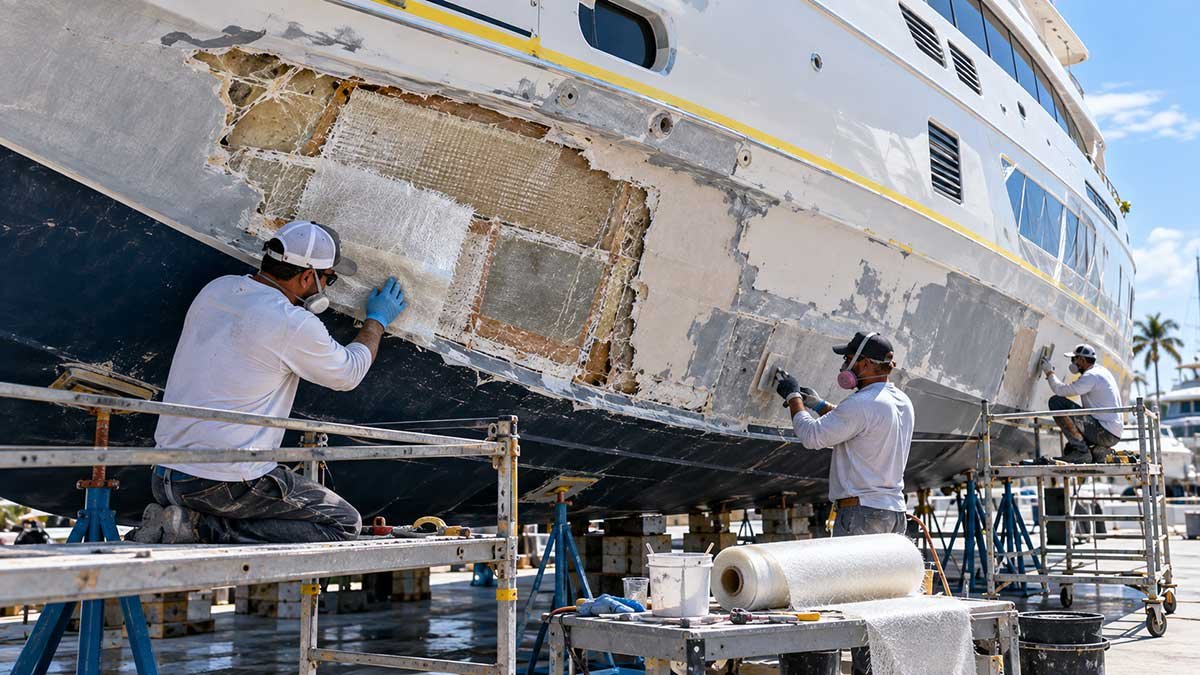
Technicians performing fiberglass collision damage repair on a yacht hull
COLLISION DAMAGE REPAIR Repair the Damage
Before the Finish
01
FIBERGLASS REPAIR

The Repair Starts Beneath the Finished Surface

When an impact has damaged the fiberglass beneath the exterior finish, the compromised area needs to be addressed before the vessel moves into fairing and refinishing.

Depending on the condition of the affected area, damaged fiberglass may need to be removed and the laminate rebuilt. The repaired area can then be shaped and prepared to transition back into the surrounding hull surface.

01 Repair
→
02 Shape
→
03 Fair
→
04 Finish
FROM DAMAGE TO FINAL FINISH

A Repair Sequence Built Around the Vessel

Not every collision or storm-damage project requires every stage. The sequence depends on what is found in the affected area.

01 ASSESS

Inspect & Document

Review the visible damage, its location and the affected area. Photos can establish the starting condition of the repair.

02 ACCESS

Expose the Damage

When needed, damaged coatings or compromised material are removed to provide better access to the fiberglass beneath the surface.

03 REPAIR

Repair the Fiberglass

The affected fiberglass is repaired according to its condition, from localized fiberglass work to more involved reconstruction when required.

04 FAIR

Shape & Fair

The repaired area is shaped and faired to correct transitions, low areas and surface irregularities before finishing.

05 PREPARE

Prepare the Surface

Surface preparation continues according to the surrounding surface and the coating or finishing system that will be applied.

06 FINISH

Refinish & Review

Once repair and preparation are complete, the area moves into the appropriate gelcoat or marine painting process and final review.

IMPORTANT

The Finished Surface Is the Last Part of the Repair

Painting or gelcoat restores the exterior appearance, but it comes after the necessary fiberglass repair, shaping, fairing and surface preparation.

When collision damage reaches the fiberglass beneath the finish, the underlying damage should be addressed before the repaired area moves into final refinishing.

DIFFERENT DAMAGE • DIFFERENT REPAIR PATH

Not Every Damaged Vessel Needs the Same Repair

The repair sequence depends on how far the damage extends into the boat or yacht and what is found beneath the exterior surface.

A localized surface issue may move relatively quickly into preparation and refinishing. Fiberglass impact damage requires the underlying fiberglass to be addressed first, while more involved structural damage can require reconstruction before the exterior surface is restored.

01
SURFACE

Exterior Surface Damage

Damage concentrated in the exterior coating or gelcoat may primarily require localized surface correction, preparation and refinishing.

01 Evaluate
→
02 Prepare
→
03 Refinish
Gelcoat Repair →
03
STRUCTURAL

Structural Fiberglass Damage

More involved fiberglass damage may require reconstruction of the affected area before shaping, fairing, preparation and exterior refinishing can begin.

01 Evaluate
→
02 Rebuild
→
03 Fair
→
04 Finish
Structural Fiberglass Repair →
FROM REPAIR TO FINAL FINISH

A Fiberglass Repair Has to Transition Back Into the Hull Surface

Once the necessary fiberglass work is complete, the repaired area may still need shaping and fairing so it transitions correctly into the surrounding hull.

Surface preparation then continues according to the existing surface and the final finishing system. Refinishing is the final stage—not a substitute for repairing damage underneath it.

01 Repair
→
02 Fair
→
03 Prepare
→
04 Finish
CONNECTED REPAIR CAPABILITIES One project may involve several stages of marine repair.
COLLISION & STORM DAMAGE FAQS

Boat & Yacht Damage Repair Questions Answered

Collision and storm damage can range from exterior surface damage to fiberglass that requires a more involved repair.

These answers explain how RD Yacht Refinishing approaches damaged boats and yachts and what owners can provide when requesting an evaluation.

01 Can collision damage extend beneath the exterior finish?

Yes. An impact that appears to have damaged only the exterior may also affect fiberglass beneath the paint or gelcoat. When necessary, the affected area may need to be opened or damaged material removed so the underlying condition can be better evaluated.

02 Does every collision repair require structural fiberglass work?

No. The repair depends on the extent and location of the damage. Some projects may involve exterior surface repair, while others require fiberglass repair or more involved structural fiberglass reconstruction.

03 What happens after damaged fiberglass is repaired?

The repaired area may need shaping and fairing so it transitions into the surrounding surface. Surface preparation then continues according to the final finishing system before gelcoat or marine paint is applied.

04 Can RD repair storm-damaged boats and yachts?

RD Yacht Refinishing provides repair and refinishing for storm-related damage when the required work falls within its marine fiberglass, fairing, gelcoat and painting capabilities. The repair path depends on the condition of the affected area.

05 Should I send photos of the damage before contacting RD?

Clear photos are helpful. Include images showing the damaged area as well as enough of the vessel to show where the damage is located. Information about the vessel and what happened can also help provide context for the initial conversation.

06 Can the repair process be documented with photos?

Project photography can document the original damage, the opened repair area, fiberglass work, fairing and preparation, and the completed exterior. This can create a useful visual record of work that may no longer be visible after refinishing.

07 What if the damage is part of an insurance claim?

Let RD know at the beginning if insurance is involved. Damage photos, vessel information and repair documentation can help maintain a clear record of the project. Insurance coverage, claim approval and payment decisions remain the responsibility of the parties involved.

08 Does RD serve boat and yacht owners in Fort Lauderdale?

Yes. RD Yacht Refinishing is located in Davie and serves the Fort Lauderdale and South Florida marine market with fiberglass repair, refinishing and related boat and yacht repair services.

NOT SURE HOW DEEP THE DAMAGE GOES? Start With the Damaged Area

You do not need to determine whether the project is surface, fiberglass or structural damage before contacting RD. Start with information about what happened and clear photos of the affected area.

NEED A DAMAGE REPAIR?

Start by Showing RD What Happened.

Send information about your boat or yacht, a brief description of the collision or storm damage, and clear photos of the affected area. RD can review the information and discuss the next step for evaluating the repair.

WHEN YOU CONTACT RD

Helpful Information to Send

01

Vessel Information Boat or yacht information relevant to the project.

02

What Happened Brief description of the collision, impact or storm damage.

03

Damage Photos Clear photos showing the affected area and its location.

04

Insurance Information Let RD know if an insurance claim is involved.

View RD Projects →