PROFESSIONAL MARINE ANTIFOULING • FORT LAUDERDALE

Boat Bottom Painting & Antifouling in Fort Lauderdale

Professional bottom painting and antifouling coating services for boats and yachts serving the Fort Lauderdale and South Florida marine market.

RD Yacht Refinishing prepares and coats underwater hull surfaces based on the vessel, existing bottom condition and requirements of the selected antifouling system.

01 Bottom Painting
02 Antifouling Coatings
03 Surface Preparation
04 Boats & Yachts
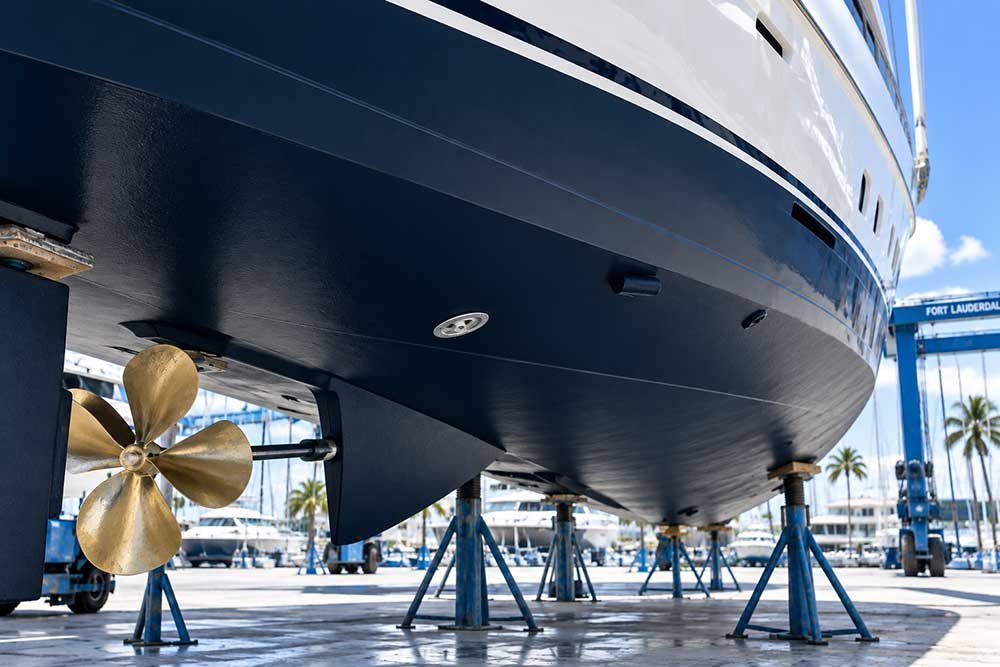
New antifouling bottom paint on a boat hull by RD Yacht Refinishing
RD YACHT REFINISHING Professional Bottom Painting Fort Lauderdale • South Florida
BELOW THE WATERLINE Preparation → Antifouling → Finished Bottom

Why Antifouling Bottom Paint Matters

The underwater portion of a boat or yacht operates in a very different environment from the hull and topsides above the waterline.

Antifouling bottom coatings are designed for submerged hull surfaces and help control marine growth. The condition of the underwater hull, existing coating and preparation required all need to be considered before another bottom coating is applied.

QUICK ANSWER

What Does Bottom Paint Do?

Bottom paint is applied to the underwater portion of a boat or yacht hull. Antifouling coatings are designed to help control the attachment and accumulation of marine growth while the vessel is in the water.

Selecting and applying the coating involves more than choosing a color. The existing bottom system, hull condition, preparation requirements and intended use of the vessel can all affect the project.

Four Parts of a Professional Bottom-Paint Project

01

Marine Growth

Boats kept in the water are exposed to marine organisms that can attach to underwater hull surfaces. Antifouling coatings are designed to help control that growth.
02

Existing Bottom Condition

Haul-out provides access to the underwater hull so the existing coating and visible surface condition can be considered before recoating.

03

Coating Compatibility

What is already on the bottom matters. The existing coating system can influence the preparation and compatibility requirements for the next antifouling coating.

04

Surface Preparation

Loose, failing or otherwise unsuitable existing material may require additional preparation before the selected antifouling system is applied.

Bottom Painting Is Not the Same as Hull & Topsides Painting

A boat's exterior can require different coating systems above and below the waterline.

Bottom paint refers to coatings used on underwater hull surfaces. Antifouling products are formulated for this submerged environment.

Hull and topsides painting addresses visible exterior surfaces above the waterline and uses a different preparation and finishing process.

Learn About Hull & Topsides Painting →
BELOW WATERLINE Bottom Paint

Antifouling coating for submerged underwater hull surfaces.

ANTIFOULING
WATERLINE
ABOVE WATERLINE Hull & Topsides

Marine refinishing for visible exterior hull surfaces above the waterline.

MARINE FINISH
01

The Existing Bottom Helps Determine the Work Required

A bottom-paint project should not automatically begin with another coat of paint. Existing coating condition, adhesion, compatibility and visible hull condition can affect the preparation required before recoating.

ANTIFOULING COATING OPTIONS

Ablative vs. Hard Bottom Paint

Antifouling coatings are available in different types, and the appropriate system depends on the vessel, how it is used, the existing bottom coating and the requirements of the product being considered.

Two common categories are ablative and hard antifouling coatings. Understanding the basic difference between them can help boat owners have a more informed discussion about their bottom-paint project.

TYPE 01

Ablative Bottom Paint

01

Ablative antifouling coatings are designed so the coating surface gradually wears or erodes during service, exposing active coating material as the surface changes.

AN ABLATIVE SYSTEM MAY BE CONSIDERED WHEN:
  • 01

    The vessel's use is appropriate for the selected ablative coating.

  • 02

    A coating designed to wear during service is desired.

  • 03

    The existing bottom system and new coating are compatible.

  • 04

    The manufacturer's preparation and application requirements can be followed.

TYPE 02

Hard Bottom Paint

02

Hard antifouling coatings form a comparatively hard coating film rather than relying on the same controlled wearing action associated with ablative systems.

A HARD SYSTEM MAY BE CONSIDERED WHEN:
  • 01

    The vessel's operating requirements are suited to the selected hard coating.

  • 02

    A hard coating surface is appropriate for the application.

  • 03

    The existing coating and new system are compatible.

  • 04

    Preparation and application can meet the manufacturer's requirements.

QUICK ANSWER

Is Ablative or Hard Bottom Paint Better?

Neither type is automatically better for every boat or yacht.

The appropriate choice depends on the vessel, how it is used, its existing coating system and the requirements of the antifouling product being considered.

The important step is choosing a compatible coating system and preparing the underwater hull correctly for that system.

CHOOSING THE COATING SYSTEM

What Should Be Considered Before Choosing Bottom Paint?

Product selection should be based on more than the words "ablative" or "hard." Several parts of the project need to be considered together.

01 Existing Coating What is currently on the underwater hull?
02 Hull Material Is the selected coating appropriate for the substrate?
03 Vessel Use How and where is the boat normally operated?
04 Time in Water How is the vessel typically stored and used?
05 Bottom Condition What preparation is required before recoating?
06 Product Requirements What does the coating manufacturer specify?
!
EXISTING BOTTOM PAINT MATTERS

Can Any Antifouling Paint Be Applied Over the Existing Coating?

Not automatically. Compatibility and preparation requirements should be determined before changing antifouling products or applying another coating over an existing bottom-paint system.

When the existing product is known, the requirements for the proposed new coating can be reviewed. When the coating history is unknown, the condition of the existing bottom becomes an especially important part of planning the project.

FORT LAUDERDALE & SOUTH FLORIDA

The Boat's Actual Use Should Help Guide the Decision

Boats kept in South Florida do not all operate the same way. Some remain in the water for extended periods, while others have very different storage and operating patterns. RD considers the individual vessel, existing coating and project requirements rather than assuming one antifouling system is right for every boat.

THE RD REFINISHING PROCESS

From Bottom Inspection to Antifouling Application

Professional bottom painting involves more than applying another coat of antifouling paint. The existing coating, underwater hull condition and preparation requirements should be considered before the new coating system is applied.
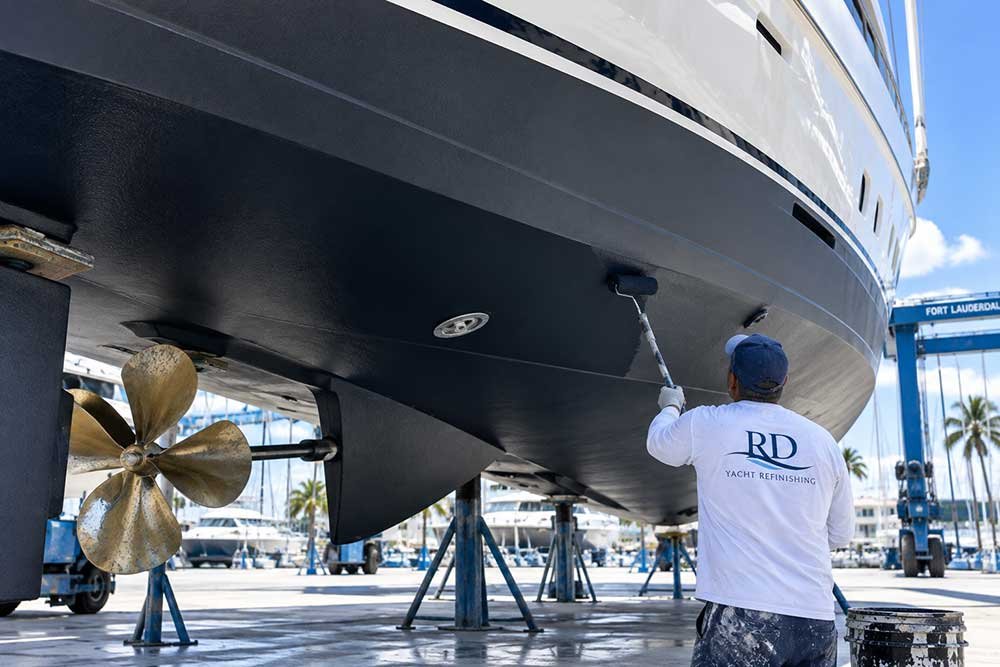
Antifouling bottom paint being applied to a yacht hull
ANTIFOULING APPLICATION Preparing & Coating the Underwater Hull RD Yacht Refinishing
01 — 06
BOTTOM PAINTING PROCESS

The Condition of the Bottom Determines the Work Required

Every underwater hull does not require exactly the same preparation. RD evaluates the accessible bottom surfaces, existing coating and visible condition before moving through the preparation and coating process.

Inspect → Prepare → Repair if Needed → Coat → Inspect
01
INSPECTION

Review the Underwater Hull

Accessible underwater hull surfaces and the existing bottom coating are reviewed to help identify the condition of the current system and the preparation the project may require.

02
PREPARATION

Clean & Prepare the Existing Surface

The underwater surface is prepared according to its condition and the requirements of the coating system being considered.

03
EXISTING COATING

Address Unsuitable Existing Paint

Loose, failing or otherwise unsuitable existing coating is addressed as required so the surface can be properly prepared for the next coating system.

05
ANTIFOULING

Apply the Selected Bottom Coating

Once the surface is ready, the selected antifouling system is applied according to the requirements appropriate for the coating and project.

06
COMPLETION

Final Bottom Inspection

The completed underwater hull is reviewed as the bottom-paint portion of the refinishing project reaches completion.

WHAT IF DAMAGE IS FOUND?

Bottom Paint Shouldn't Be Used to Hide a Hull-Repair Problem

Haul-out can make underwater areas accessible that are difficult to evaluate while the vessel is in the water. If visible cracks, impact damage or fiberglass problems are discovered, the condition should be considered before the area is recoated.

Explore Fiberglass Repair →
RD
EVERY BOTTOM IS DIFFERENT

Preparation Is Based on the Vessel in Front of Us

Existing coating condition, coating history, visible hull condition and the antifouling system being applied can all affect the amount of preparation required.

Discuss Your Bottom-Paint Project →
BOTTOM-PAINT MAINTENANCE

When Does Bottom Paint Need Attention?

There is no single bottom-paint schedule that is correct for every boat or yacht. The condition of the existing coating can be just as important as knowing when it was last painted.

Antifouling type, vessel use, time in the water, underwater maintenance, existing coating condition and operating environment can all affect how a boat's bottom changes over time.

QUICK ANSWER

How Often Should a Boat Be Bottom Painted?

The underwater hull should not be judged by the calendar alone.

Knowing when the boat was last painted is useful, but the actual condition of the antifouling coating, presence of marine growth, areas of wear or failure, vessel use and coating requirements should also be considered.

A haul-out provides an opportunity to inspect the underwater hull directly and determine what the bottom actually needs.

SIGNS TO LOOK FOR

Six Signs the Bottom May Need Attention

These conditions do not automatically mean every boat requires the same work, but they can indicate that the underwater hull should be evaluated.

01

Increased Marine Growth

Increasing growth on underwater surfaces can be one indication that the condition of the existing antifouling system should be reviewed.

02

Worn Coating

Areas where the existing bottom coating has become noticeably worn can help show where the antifouling system has changed during service.

03

Flaking or Poor Adhesion

Loose, peeling or poorly adhered coating should be considered during preparation rather than simply covered with another coat of paint.

04

Uneven Bottom Condition

Significant differences across the underwater coating can help identify areas that may require additional preparation before recoating.

05

Unknown Coating History

When the existing antifouling product or coating history is unknown, compatibility and preparation become especially important considerations.

06

Visible Hull Damage

Cracks, impact areas or other visible underwater hull damage should be evaluated instead of simply being hidden beneath another coating.

CONDITION
VS
CALENDAR
DON'T USE AGE ALONE

Two Boats Painted at the Same Time Can Wear Differently

Knowing the age of the bottom paint is useful, but age alone does not tell the complete story.

Two boats painted at the same time can later have very different bottom conditions because they may use different products, spend different amounts of time in the water, operate differently or receive different underwater maintenance.

The actual condition of the underwater hull should remain part of the decision.
UNDERWATER HULL INSPECTION

A Haul-Out Reveals More Than Bottom-Paint Color

Once the vessel is out of the water, accessible underwater surfaces can be examined more directly.

01 Marine Growth
02 Coating Wear
03 Coating Failure
04 Visible Damage
05 Previous Repairs
06 Waterline Condition
06
IF DAMAGE IS DISCOVERED

Finding Fiberglass Damage Does Not Automatically Mean a Major Structural Repair

A visible underwater defect may involve the exterior surface, fiberglass laminate or a more involved area. The condition should be evaluated before deciding what repair is appropriate and before the area is recoated.

WHEN A PROBLEM IS FOUND A Simple Decision Process
01 Find Identify the condition
→
02 Evaluate Determine what it involves
→
03 Repair Address it if required
→
04 Recoat Complete the bottom system
FORT LAUDERDALE • BROWARD COUNTY • SOUTH FLORIDA

Boat Bottom Painting for Fort Lauderdale & South Florida

RD Yacht Refinishing provides professional bottom painting and antifouling services for boats and yachts serving the Fort Lauderdale marine community and surrounding South Florida areas.

Boats in South Florida can have very different operating and storage patterns. Some remain in the water for extended periods, while others are used, stored and maintained differently. The bottom-paint project should be considered around the individual vessel rather than a one-size-fits-all maintenance schedule.

LOCAL MARINE REFINISHING

Located in Davie. Serving Fort Lauderdale's Boating Community.

RD Yacht Refinishing is located in Davie, Florida, with convenient access to the Fort Lauderdale and Broward County marine market.

Bottom-paint projects can be coordinated as a dedicated underwater-hull service or as part of broader painting, fiberglass repair, refinishing or restoration work.

RD YACHT REFINISHING South Florida Marine Refinishing
LOCATION 4960 SW 52nd St
Bay 416
Davie, FL 33314
PRIMARY SERVICE MARKET Fort Lauderdale
Broward County
South Florida
SOUTH FLORIDA BOTTOM MAINTENANCE

What RD Considers When Evaluating a Bottom-Paint Project

The appropriate work depends on the boat, its existing coating and the condition of the underwater hull.

01

Time in the Water

A vessel that remains in the water for extended periods can have different bottom-maintenance considerations from one stored out of the water more frequently.

02

How the Boat Is Used

Operating patterns and vessel use can be relevant when considering the existing bottom and the antifouling system being applied.

03

Existing Coating

Knowing what is already on the underwater hull can help determine coating compatibility and preparation requirements.

04

Bottom Condition

Wear, adhesion, marine growth and visible surface condition can influence the preparation required before another coating is applied.

BOAT & YACHT BOTTOM PAINTING

Need the Bottom of Your Boat Evaluated?

Tell RD about your boat or yacht, the existing bottom coating if known, when it was last painted and any problem areas you've noticed. Photos can also help provide useful project information.

Contact RD →
BOAT BOTTOM PAINTING FAQ

Bottom Painting & Antifouling Questions

Answers to common questions about antifouling coatings, bottom-paint preparation and underwater hull maintenance for boats and yachts in Fort Lauderdale and South Florida.

01 What does antifouling bottom paint do? +

Antifouling bottom paint is applied to underwater hull surfaces and is designed to help control the attachment and accumulation of marine growth while the vessel is in the water.

The appropriate coating and preparation depend on factors such as the vessel, existing bottom system and product requirements.

02 How often should a boat be bottom painted? +

There is no single repainting interval that is correct for every boat. Antifouling type, vessel use, time in the water, underwater maintenance, operating conditions and the condition of the existing coating can all affect when the bottom needs attention.

The actual condition of the underwater hull should be considered along with the age of the existing bottom paint.

03 What is the difference between ablative and hard bottom paint? +

Ablative antifouling coatings are designed so the coating surface gradually wears or erodes during service. Hard antifouling coatings form a comparatively hard coating film rather than relying on the same controlled wearing action.

Neither type is automatically the right choice for every vessel. Selection depends on the boat, its use, existing coating system and the requirements of the antifouling product.

04 Can new bottom paint be applied over old bottom paint? +

That depends on the existing coating, its condition and compatibility with the new antifouling system.

Loose or failing material may require additional preparation, and compatibility requirements should be considered before applying another coating.

05 Can I change from one type of bottom paint to another? +

Changing antifouling systems may be possible, but the compatibility and preparation requirements of the existing and proposed coatings need to be considered.

The coating manufacturer's application and compatibility requirements should be followed.

06 How long does antifouling bottom paint last? +

There is no universal service life for antifouling paint. Product type, application, vessel use, time in the water, underwater maintenance and operating conditions can all affect the coating.

This is why RD recommends considering the actual condition of the bottom rather than relying only on a fixed calendar interval.

07 What if fiberglass damage is found during haul-out? +

Finding a visible defect does not automatically mean the vessel has major structural damage. The condition should first be evaluated to determine whether it involves the exterior surface, fiberglass laminate or a more involved area.

When repair is required, it should be addressed before the affected area is simply covered with another coating.

08 How much does boat bottom painting cost? +

Bottom-paint cost depends on the individual project. Vessel size, underwater surface area, hull configuration, existing coating condition, preparation requirements, selected antifouling system and any repairs can all affect the work required.

Two boats of similar length can require different amounts of preparation and therefore have different project costs.

09 Does RD bottom paint both boats and yachts? +

Yes. RD Yacht Refinishing works on boats and yachts of different sizes and provides bottom painting as part of its marine painting, fiberglass repair, refinishing and restoration services.

10 Do you provide boat bottom painting in Fort Lauderdale? +

Yes. RD Yacht Refinishing serves the Fort Lauderdale marine community, Broward County and surrounding South Florida areas.

RD is located at 4960 SW 52nd St, Bay 416, Davie, FL 33314. To discuss a bottom-paint project, call (954) 314-7336 or contact RD through the website.

BEFORE REQUESTING AN ESTIMATE

What Should You Tell RD About Your Boat?

A few basic details can help RD understand the bottom-paint project before discussing the next step.

01 What Boat Do You Have? Boat or yacht type and approximate size.
02 What's on the Bottom? Existing antifouling product, if known.
03 When Was It Last Painted? Approximate date is useful if available.
04 How Is the Boat Used? Typical use and storage information.
05 Any Known Problem Areas? Wear, damage, peeling or other concerns.
06 Do You Have Photos? Photos can provide useful project information.
TIME FOR A BOTTOM CHECK?

Talk to RD About Your Boat's Bottom Paint

Whether you're planning routine bottom-paint maintenance, dealing with worn antifouling or are unsure what coating is currently on the boat, RD can discuss the vessel and the work the underwater hull may require.

RD YACHT REFINISHING Boat & Yacht Bottom Painting
SERVICE Bottom Painting
Antifouling Coatings
SERVING Fort Lauderdale
Broward County
South Florida
LOCATION 4960 SW 52nd St, Bay 416
Davie, FL 33314